
Blog
New Chinese Cars 2026: The EVs, SUVs, and Luxury Models Shaking Up the Auto Market

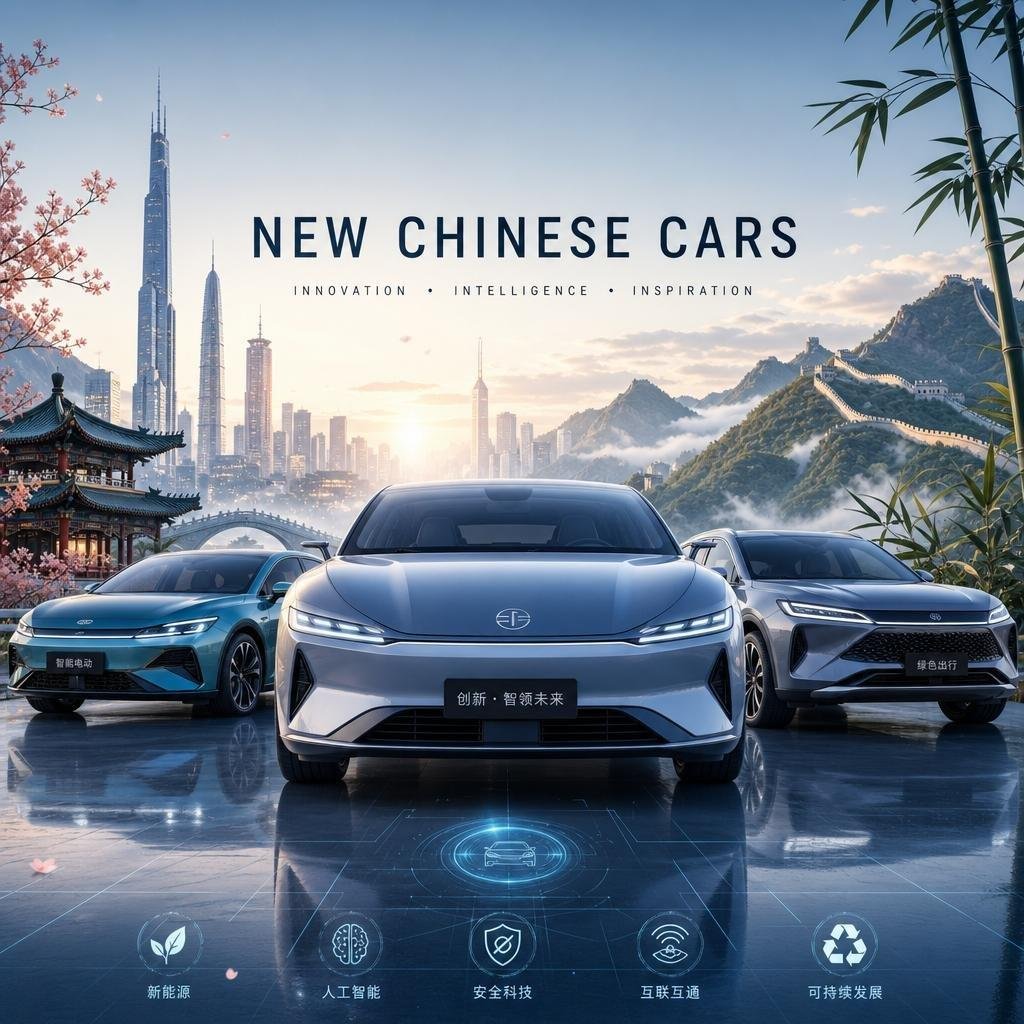
New Chinese Cars: The Complete Guide to China’s Fast-Growing Auto Revolution
New Chinese cars are no longer niche alternatives or budget-only vehicles. Over the last decade, China’s automotive industry has transformed from a domestic manufacturing powerhouse into a global leader in electric vehicles, plug-in hybrids, smart technology, battery innovation, and affordable SUVs. Today, brands such as BYD, MG, Geely, Chery, NIO, XPeng, Zeekr, Great Wall Motor, Lynk & Co, Leapmotor, and GAC are attracting attention in Europe, Asia, Australia, the Middle East, Latin America, and beyond.
For many buyers, the rise of Chinese electric cars and modern Chinese SUVs has created an exciting question: should your next car come from China? The answer depends on your budget, driving needs, local dealer support, warranty coverage, charging access, and expectations around resale value. This guide explains what makes new Chinese cars popular, which brands are worth watching, what benefits they offer, and what you should check before buying one.
- Why new Chinese cars are gaining global popularity
- The top Chinese car brands to know
- Key benefits of Chinese EVs, plug-in hybrids, and SUVs
- Important buying tips for first-time shoppers
- How Chinese cars compare with traditional automakers
- Future trends in the Chinese automotive market
Why New Chinese Cars Are Becoming So Popular
The global car market is changing quickly, and Chinese automakers are moving faster than almost anyone else. One major reason is China’s strong investment in electric vehicle technology. The country is home to some of the world’s biggest battery manufacturers and has one of the largest EV markets on the planet. This scale allows Chinese car companies to develop new models quickly, reduce production costs, and introduce advanced features at competitive prices.
Another reason is consumer demand. Drivers want cars that are efficient, safe, connected, and stylish without costing a luxury-car price. Many new Chinese cars offer large infotainment screens, driver assistance features, panoramic roofs, efficient drivetrains, and long warranties as standard or affordable options. In markets where buyers have traditionally chosen Japanese, Korean, European, or American brands, Chinese vehicles are becoming a serious alternative.
Chinese automakers are also expanding globally through partnerships, acquisitions, and local distribution networks. For example, MG is now owned by SAIC Motor and has become one of the most visible Chinese-backed brands in many international markets. Volvo is owned by Geely, and brands like Polestar, Zeekr, and Lynk & Co reflect China’s growing influence in premium and electric mobility.
Top Chinese Car Brands to Know
There are many Chinese automakers, but a few names appear frequently when discussing the best Chinese car brands and the newest Chinese vehicles. Each company has its own strengths, from affordable city cars to premium electric SUVs.
| Brand | Known For | Popular Focus |
|---|---|---|
| BYD | Battery technology and EV leadership | Electric cars, plug-in hybrids |
| MG | Value-focused global models | Hatchbacks, SUVs, EVs |
| Geely | Global ownership and engineering reach | Sedans, SUVs, hybrids |
| NIO | Premium EVs and battery swapping | Luxury electric SUVs and sedans |
| XPeng | Smart technology and driver assistance | Connected electric cars |
| Chery | Affordable SUVs and exports | Compact and family SUVs |
| GWM / Ora | SUVs, pickups, and stylish EVs | Electric city cars and off-road models |
| Zeekr | Premium electric performance | High-end EVs |
BYD: A Leader in Chinese Electric Cars
BYD is one of the most important names in the global EV industry. The company began as a battery manufacturer and later became a major automaker. This background gives BYD a strong advantage in battery development, cost control, and vehicle efficiency. Models such as the BYD Atto 3, Dolphin, Seal, Han, and Tang have helped the brand expand internationally.
BYD’s appeal comes from a mix of practical range, competitive pricing, strong safety equipment, and efficient electric drivetrains. The company also produces plug-in hybrid vehicles, which are popular with drivers who want electric driving for short trips but still need gasoline flexibility for longer journeys.
MG: Chinese-Owned, Globally Recognized
MG has British roots, but today it is owned by SAIC Motor, one of China’s largest automotive companies. The modern MG lineup is known for delivering strong value, especially in the compact SUV and electric car segments. Vehicles like the MG4 EV, MG ZS EV, and MG HS have become popular choices in several markets because they combine modern design, practical cabins, and attractive pricing.
For buyers looking at affordable Chinese cars with established dealer networks, MG is often one of the first brands to consider.
NIO, XPeng, and Zeekr: The Premium Chinese EV Wave
Not all new Chinese cars are budget-friendly models. Brands like NIO, XPeng, and Zeekr are competing in the premium electric vehicle space. NIO is well known for its battery-swapping technology in China, allowing owners to replace a depleted battery with a charged one at dedicated stations. XPeng focuses heavily on software, connectivity, and advanced driver assistance. Zeekr, backed by Geely, targets buyers who want premium design, performance, and advanced EV platforms.
These brands show that Chinese automakers are not just chasing low prices. They are also competing on innovation, luxury, technology, and user experience.
Key Benefits of Buying New Chinese Cars
There are several reasons why shoppers are considering new Chinese cars for sale, especially in the EV and SUV categories. While every model should be evaluated individually, many Chinese vehicles share common advantages.
1. Competitive Pricing
Chinese car manufacturers often offer strong value for money. Because many brands benefit from large-scale production and vertically integrated supply chains, they can price vehicles aggressively. This does not always mean “cheap”; rather, it often means more features for the price compared with some traditional competitors.
2. Strong EV and Battery Technology
China is a global leader in EV adoption and battery manufacturing. Many Chinese EVs use modern lithium iron phosphate batteries, often called LFP batteries, which are known for durability, cost efficiency, and safety advantages. BYD’s Blade Battery is one well-known example of this approach.
3. High Equipment Levels
Many new Chinese cars come with features that may cost extra in rival vehicles. Depending on the model and market, these can include:
- Large touchscreen infotainment systems
- Apple CarPlay and Android Auto support
- Adaptive cruise control
- 360-degree cameras
- Lane-keeping assistance
- Panoramic sunroofs
- Heated and ventilated seats
- Over-the-air software updates
4. Rapid Model Development
Chinese automakers are known for fast development cycles. New models, facelifts, and technology updates often arrive quickly. This means buyers may see more frequent improvements in range, charging speed, infotainment, interior quality, and safety systems.
5. Practical SUVs and Family Cars
The popularity of SUVs has helped many Chinese brands expand globally. Companies like Chery, Haval, MG, BYD, and GAC offer practical family SUVs with spacious interiors, competitive warranties, and useful technology. For families looking for a modern vehicle without stretching the budget too far, a Chinese SUV can be worth a test drive.
Chinese Electric Cars vs. Traditional Automakers
When comparing Chinese electric cars with models from Japanese, Korean, European, or American brands, the result is no longer one-sided. Traditional automakers still have advantages in brand reputation, long-term resale data, established service networks, and decades of customer trust. However, Chinese brands are closing the gap quickly in design, technology, safety, and performance.
| Category | Chinese Cars | Traditional Brands |
|---|---|---|
| Price | Often very competitive | Varies widely by brand |
| EV Technology | Strong and fast-moving | Improving rapidly |
| Brand Trust | Growing in many markets | Usually well established |
| Dealer Network | Depends on country | Often broader |
| Standard Features | Frequently generous | May require options |
| Resale Value | Still developing | More predictable |
The best choice depends on the specific vehicle, not just the badge. A well-reviewed Chinese EV with a strong warranty and local service support may be an excellent buy. On the other hand, a lesser-known model with limited parts availability may involve more risk.
Important Things to Check Before Buying a New Chinese Car
Before buying any vehicle, research is essential. This is especially true for newer Chinese car brands entering your local market. Here are practical tips to help you make a confident decision.
- Check local warranty length and what it covers.
- Confirm battery warranty details for EVs and plug-in hybrids.
- Research dealer locations and service availability.
- Read independent safety ratings where available.
- Compare real-world range, not just official figures.
- Ask about spare parts supply and repair times.
- Test drive the car on city streets and highways.
- Review charging compatibility and charging speed.
- Compare insurance costs before signing a contract.
Warranty and Battery Coverage
Many Chinese automakers offer attractive warranties to build confidence. However, warranty terms vary by country and model. For electric vehicles, pay close attention to battery coverage. Look for details such as battery warranty duration, mileage limits, minimum battery capacity retention, and whether roadside assistance is included.
Safety Ratings
Safety is one of the most important factors when choosing a new vehicle. Some Chinese cars have performed well in independent safety tests such as Euro NCAP, ANCAP, or other regional programs. However, ratings can differ by model and market specification. Always check the exact model year and variant available in your country.
Software and Infotainment
Modern Chinese cars often place heavy emphasis on large screens and connected features. During a test drive, check whether the system is intuitive, responsive, and available in your preferred language. Also confirm whether the vehicle supports over-the-air updates, smartphone integration, and local navigation services.
Popular Types of New Chinese Cars
The phrase new Chinese cars covers a wide range of vehicles. Some are fully electric, others are plug-in hybrids, and many are traditional gasoline-powered SUVs or sedans. Here are the main categories buyers are likely to encounter.
Chinese EVs
Electric cars are the most talked-about segment. Models from BYD, MG, NIO, XPeng, Zeekr, Ora, and Leapmotor are designed to compete with global EVs in range, performance, and price. Buyers often choose Chinese EVs because they want low running costs, quiet driving, and access to modern technology.
Plug-in Hybrid Chinese Cars
Plug-in hybrids are especially attractive for drivers who are not ready for a full EV. They can complete short daily trips using electric power while still offering a gasoline engine for longer drives. BYD is particularly strong in this area, but other Chinese manufacturers are also expanding their hybrid lineups.
Chinese SUVs
SUVs remain extremely popular worldwide, and Chinese brands have responded with many compact, midsize, and large SUV options. These vehicles often emphasize interior space, comfort, equipment, and value. Chery, Haval, MG, GAC, and BYD are among the brands offering competitive Chinese SUVs.
Affordable City Cars
Small EVs and compact hatchbacks are common in China and are slowly reaching more global markets. These cars are designed for urban driving, easy parking, and low running costs. They may not suit long highway trips, but they can be excellent second cars or commuter vehicles.
Are New Chinese Cars Reliable?
Reliability is one of the biggest questions buyers ask. The honest answer is that it depends on the brand, model, and local support network. Some Chinese automakers have improved quality dramatically and now produce vehicles that compete well with established brands. Others are still building their reputation outside China.
Because many new Chinese vehicles have only recently entered global markets, long-term reliability data may be limited. This does not mean they are unreliable, but it does mean buyers should be careful and informed. Look for owner reviews, independent road tests, warranty claims data where available, and feedback from local mechanics or EV specialists.
Real-World Ownership: What Drivers Often Notice
Owner feedback on new Chinese cars commonly highlights a few themes. Many drivers appreciate the value, comfort, quiet EV performance, and generous equipment. In particular, buyers moving from older gasoline cars are often impressed by the smooth acceleration and low running costs of Chinese electric cars.
However, owners may also mention learning curves with infotainment systems, unfamiliar brand perception, or uncertainty about resale value. In markets where the dealer network is still growing, service appointments and parts availability can be important considerations. This is why checking local after-sales support is just as important as comparing horsepower, range, or screen size.
The Future of Chinese Cars
The future of new Chinese cars looks highly competitive. Chinese automakers are investing heavily in next-generation batteries, faster charging, autonomous driving systems, vehicle software, and global manufacturing. Some companies are also building or planning factories outside China to reduce shipping costs, meet local regulations, and improve market access.
Expect to see more Chinese electric SUVs, compact EVs, premium sedans, plug-in hybrids, and even electric pickup trucks in the coming years. Competition will likely push prices down and encourage all automakers to improve technology, warranty coverage, and efficiency. For consumers, that is good news.
Should You Buy a New Chinese Car?
A new Chinese car can be a smart purchase if it fits your needs and is supported properly in your area. Buyers who value modern technology, strong standard equipment, competitive pricing, and electric efficiency may find excellent options from Chinese brands. However, it is important to compare carefully and avoid buying only based on price.
Choose a Chinese vehicle if:
- You want strong value for money.
- You are interested in EV or plug-in hybrid technology.
- The brand has good local warranty and service support.
- The model has positive independent reviews and safety ratings.
- You are comfortable with a newer brand in your market.
You may want to wait or choose another brand if:
- There is no nearby dealer or service center.
- Spare parts availability is unclear.
- Resale value is a major concern for you.
- The model lacks independent safety testing.
- You need proven long-term reliability data.
Conclusion: New Chinese Cars Are Changing the Global Auto Market
New Chinese cars have become some of the most interesting vehicles on the market, especially in the electric car and SUV segments. Brands like BYD, MG, Geely, NIO, XPeng, Chery, GWM, and Zeekr are proving that Chinese automakers can compete on more than just price. They are offering advanced batteries, modern designs, generous features, and increasingly strong safety credentials.
That said, smart shopping still matters. Before buying a Chinese EV, hybrid, or SUV, compare warranty terms, service coverage, safety ratings, real-world range, and ownership reviews. If the model is well supported in your area, a new Chinese car could offer excellent value and a surprisingly premium driving experience.
As the automotive industry shifts toward electrification and smarter vehicles, Chinese car brands will continue to play a major role. Whether you are looking for an affordable electric hatchback, a family-friendly SUV, or a high-tech premium EV, the latest generation of Chinese cars deserves a place on your shopping list.